Graduation songs congratulate. The good ones say goodbye. Whatever else is happening that week, the event underneath it is a leaving — of a city, a routine, a group of people who will never again all be in the same room — and a song that only celebrates the achievement misses the part everyone in the room is actually feeling.
"You did it" is true of everyone in the hall
That is the whole trouble with the standard graduation lyric. It is accurate, it is deserved, and it applies to several hundred people simultaneously. The person you are writing for already knows they did it. What they do not know is what you noticed while they were doing it.
The detail is in the four years, not the ceremony
The gown, the stage, the rolled-up certificate — all of it is the last forty minutes of something that took years, and none of it belongs to your person specifically. What belongs to them is the bus at seven in the morning. The module they nearly failed and now teach other people. The flat with the broken heating and the housemate who never washed a plate. The year they thought about quitting and told only you.
Pick one of those. Preferably the one that cost them something, because the cost is what turns congratulation into recognition.
Who it is from changes what the song is
A parent's song is about watching: the things you saw from the outside that they never knew you noticed. A friend's song is about being in it with them, and can afford to be funnier and less careful. A partner's song is usually about what happens next, because that is the part you are both quietly nervous about.
Decide which one you are before you write a line. Songs that try to be all three end up formal, and formal is the register of the ceremony they have just sat through.
Proud or funny. Not both
The two are both good graduation songs and they are different songs. The proud one earns its ending by staying serious the whole way; the funny one earns its last line by staying funny until the point where it stops. Hedging between them gives you a song that jokes and then apologises for joking, and it is the most common way one of these goes flat.
Wish, do not forecast
There is a strong pull towards predicting their life — the career, the house, the great things ahead. It ages badly and, more to the point, it is about a person who does not exist yet. A wish is smaller and survives: that they keep the friends, that they stay the person who calls, that they let themselves be bad at something again. Wishes are specific. Forecasts are flattery with a calendar.
The week after is better than the day of
On the day, everything competes: family, photographs, a hundred other people's congratulations. The week after is when the noise stops and the leaving gets real — nothing scheduled, everyone gone home. A song that arrives then does not have to fight anything to be heard, and it turns up exactly when the person has time to listen to it twice.
Their music, not graduation music
There is a genre of graduation song — swelling, orchestral, faintly cinematic — and it is nobody's actual taste. The gift is more convincing in whatever they have been playing all year, even if that is drill or lo-fi or something you cannot stand. The song sounding like them is part of the message.
Making one
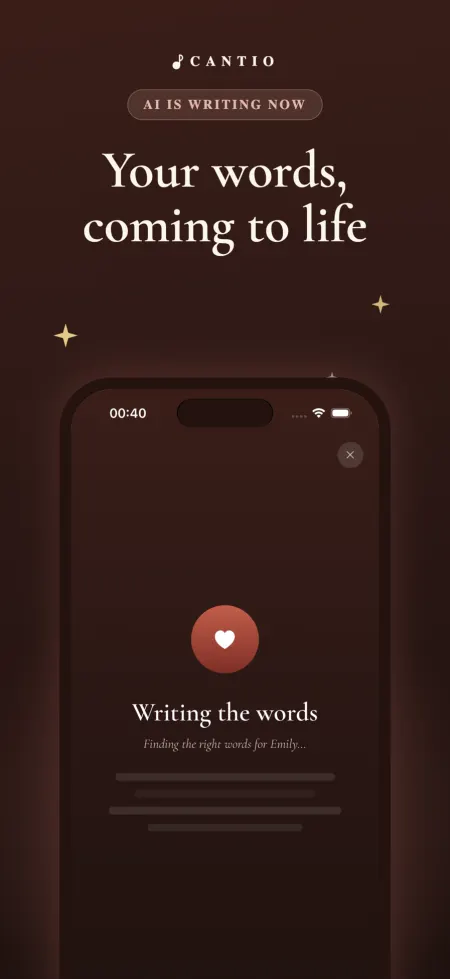
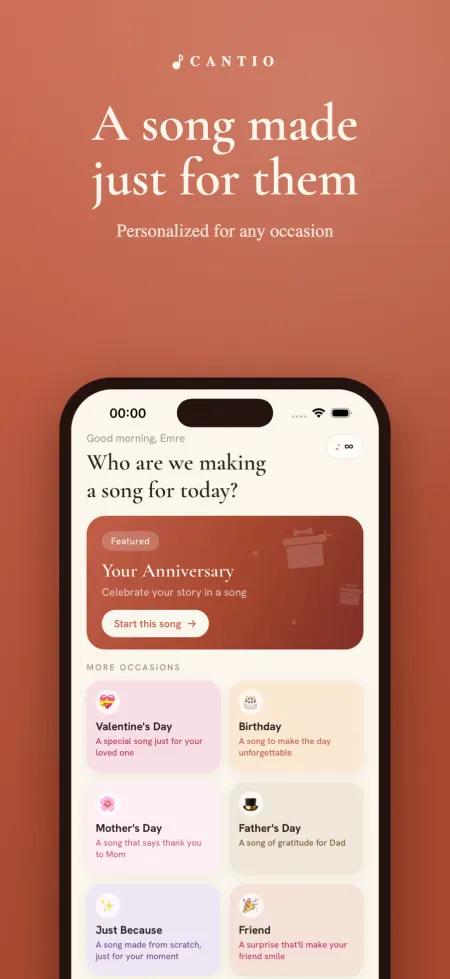
Cantio writes the lyrics from what you give it — their name, your relationship, the occasion and the detail you chose. Its occasion list names the ones it is built around and has a Just Because option for everything it does not name, which is the right shape for this: a graduation song is carried by the four years you put into the detail, not by the label on the front of it.
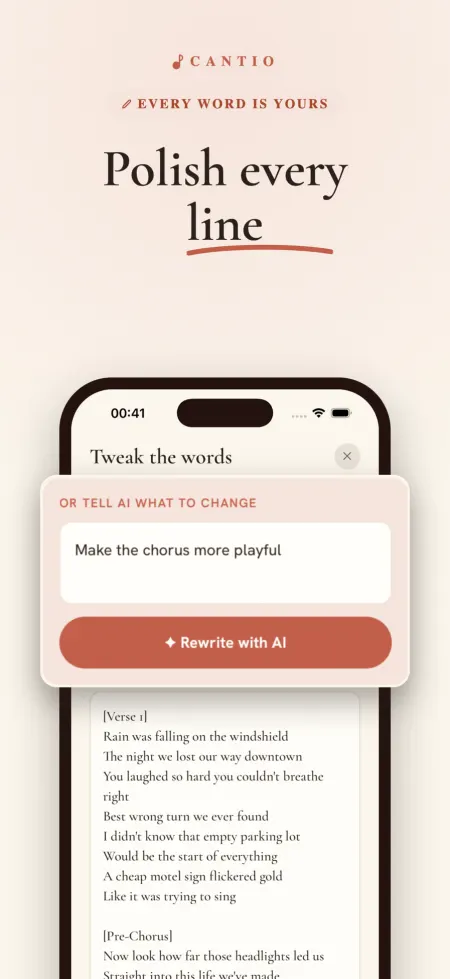
The lyrics arrive before any music is recorded, which matters more here than on most occasions — the difference between a line that names the bus at seven and one that says congratulations is one edit, and you get to make it before anything is sung.
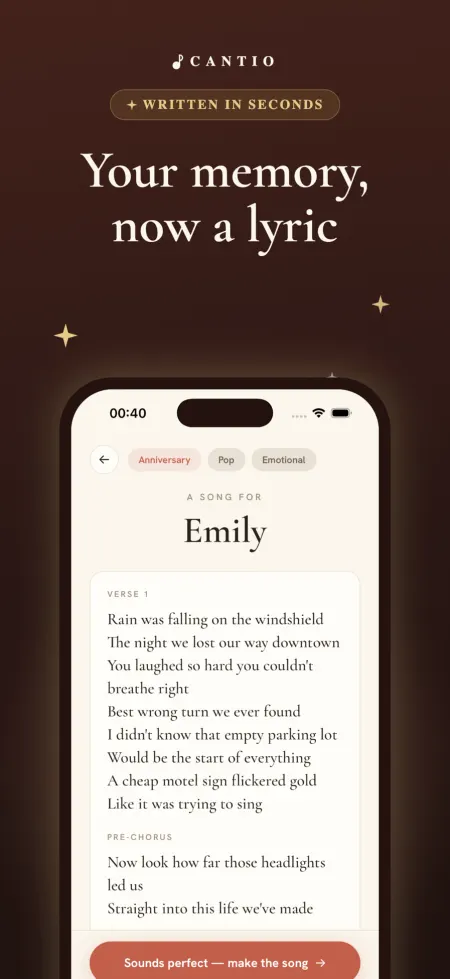
Every story comes back as two songs rather than one, so the last call is still yours: which of them sounds like the person leaving, rather than like the occasion they are leaving through. The four-step guide has the whole process, and how to write lyrics about someone is the longer answer to choosing the detail.
The line that does the work
Somewhere in it there should be one sentence that only you could have written — the thing you saw and never mentioned, the year they nearly stopped. That is the line they will remember in five years, long after the certificate is in a drawer and the ceremony is a photograph nobody has printed.