Writing about someone you love produces adjectives. Kind, strong, always there, one in a million. They are all true and none of them are about anyone in particular, which is why a song built from them sounds like it was written for a category of person rather than a person. The fix is not better adjectives. It is fewer of them.
Write down what only you would know
Before you write a line, write a list. Not qualities — facts. What they keep in the car door. The thing they say when they are about to lie. The one meal they make properly and the three they do not. The argument you still bring up because it has become funny. Ten minutes of that list is worth more than an hour of trying to phrase how you feel, because the feeling is already in the facts and it arrives without being announced.
The test for each item: could someone who has never met them have written it? If yes, cross it out. What is left is the song.
Nouns do the work that adjectives claim to do
"She was kind to me" asks the listener to take your word for it. "She left the porch light on every night I was out" does not ask for anything — it shows the kindness and lets them arrive at the word themselves. That arrival is the whole pleasure of a lyric.
So prefer the concrete noun to the abstract one, every time. Not loyalty, the same seat at the same table. Not grief, an unopened jar nobody in the house can open now. The abstraction is what you mean; the object is what you write.
One image, returned to, beats five listed
Once the list is in front of you the temptation is to use all of it. Do not. A song that names five things sounds like an inventory; a song that names one and comes back to it twice sounds like someone who has thought about this for years. Pick the image with the most room in it — something you can look at from a second angle in the last verse — and let the rest of the list stay in the drawer where it is still doing its job.
Do not rhyme yourself into a lie
The most common way a personal lyric goes false is small and technical: the line needed a rhyme, so the memory moved. It was August and it became December because December rhymed. Nobody but the two of you will ever know, and the two of you are the entire audience.
When a rhyme forces a fact, change the rhyme. Use a near rhyme, end the line early, or let the line not rhyme at all — an unrhymed line in a rhymed verse reads as emphasis, not as a mistake.
The chorus is the part they will quote back
Verses carry the detail; the chorus carries the one sentence you want them to keep. Write it as something you would actually say out loud to them — short enough to remember, plain enough to mean, and not a summary of the verses. If the chorus could be swapped into another song about another person without anyone noticing, it is a slogan, and you are one line away from having written a greetings card with a melody.
Give them something to do in the song
Songs about someone tend to leave the someone standing still while the writer feels things at them. Put them in motion: let them answer the phone, lose the keys, win the argument, fall asleep during the film they chose. A person doing something is recognisable. A person being admired is furniture.
Read it aloud before you believe it
Out loud is where the false lines show up — the inversion nobody says, the word you picked because it looked right on the page, the syllable too many that trips the phrase. Read the whole thing at speaking pace and mark every place your mouth hesitates. Those are the edits, and there are usually four or five of them.
Then one last pass with the only question that matters: could this be about somebody else? If it could, the detail is missing, and putting it back is the difference between a nice lyric and theirs.
If you would rather not start from a blank page
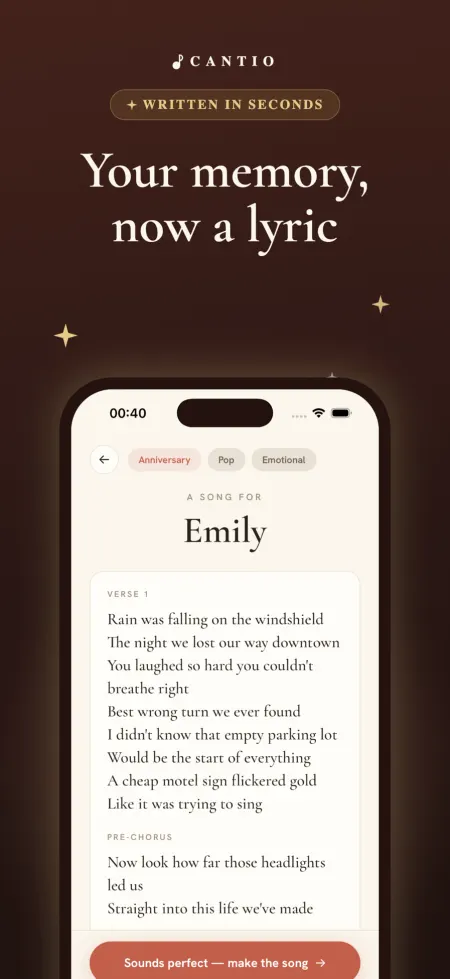
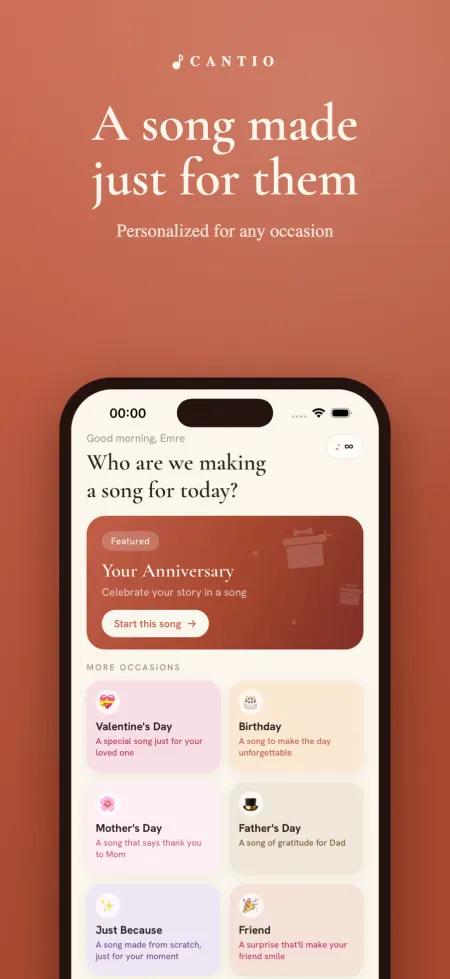
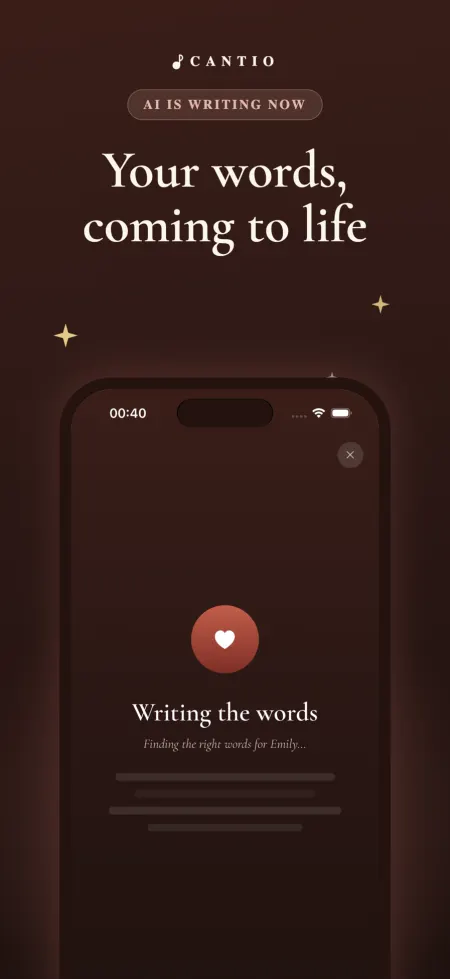
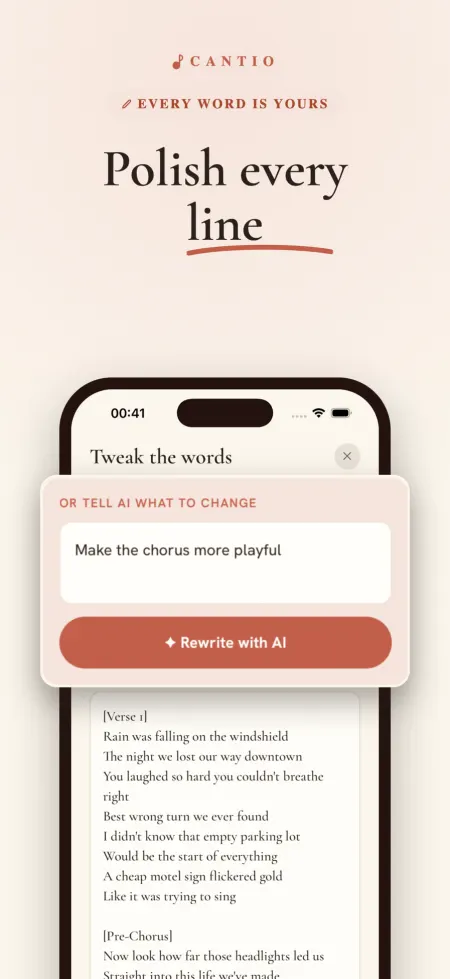
Everything above is the work, and it is still the work when something else is doing the drafting. Cantio is built around that order: you give the name, your relationship, the occasion and the detail, and it writes original lyrics from those words rather than from a template. The words come back before any music is recorded, and you can edit any line or ask for a rewrite — so the list you made at the top is still what decides how the song turns out.
Every story comes back as two different songs, so the choice between them is one more place your judgement about the person does the deciding. The four-step guide walks through the rest of it.
The part that stays yours
Nobody else can tell you which detail is the one. That judgement — knowing that the porch light matters and the holiday does not — is the whole skill, and it is the part that no tool has any access to. Everything downstream of it is production.