A song in a stranger's voice is a gift you chose. A song in your voice is a gift you made. The words can be identical and the person hearing it will still know the difference in the first second, before they have taken in a single line, because the first thing anyone recognises in a recording is who is singing.
Why the voice matters more than the production
A personal song is judged by one listener, and that listener is not comparing it with the radio. They are comparing it with you. A polished vocal by nobody in particular is pleasant and anonymous; your voice, even unpolished, is the one detail in the song that cannot have come from anyone else. It does the same job as handwriting on a card: the content matters, but the hand is what makes it yours.
That is also why a voice song is worth more care, not less. If the person will hear you singing their name, the words had better be the ones you would actually say to them.
What Cantio asks you to record
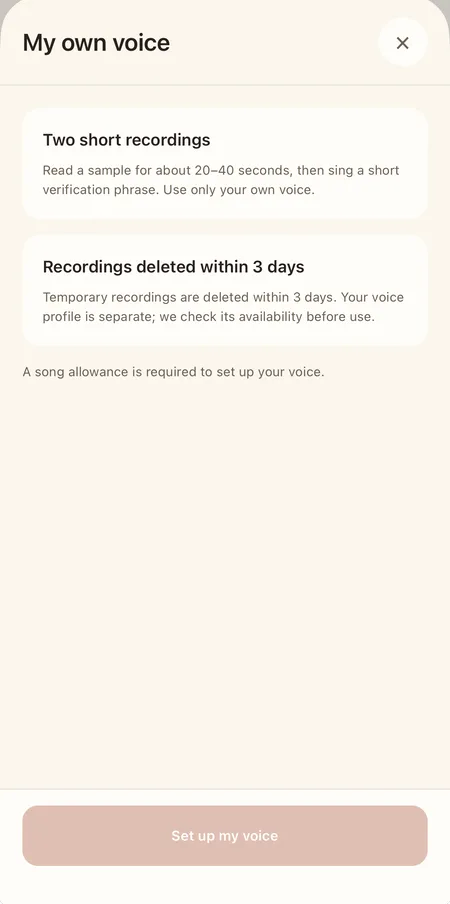
Cantio sets up your voice from two short recordings. First you read a sample aloud for about 20 to 40 seconds. Then you sing a short verification phrase. The instruction beside both is plain: use only your own voice. The second recording is a check, and the rule is the point of it — a feature that sings in a real person's voice should only ever sing in the voice of the person using it.
What happens to the recordings
They do not stay around. The recordings, and the voice profile Cantio builds from them, are kept for three days and then deleted automatically, and neither is used to train AI models. Because the profile expires, the app checks it is still available before it uses it for a song. The Cantio privacy policy has the detail.
Recording it well
Most of what makes a voice recording usable happens before you press the button. Pick the quietest room you have, and a small one with soft things in it — curtains, a sofa, clothes in a wardrobe — rather than a kitchen or a bathroom, which give everything an echo. Turn off whatever is humming in the background. Hold the phone at a steady distance, close but not against your mouth.
Then read the sample the way you talk, not the way you would read to an audience. A voice that is performing sounds like someone else, and the whole reason to do this is that it should sound like you.
Writing the song
Everything that makes a personal song work still applies, and matters more when it is your voice delivering it. Give it one specific detail that could only be about this person rather than a list of compliments; the guide to writing lyrics about someone goes through how to find it. Read the lyrics before the music is made and change any line that sounds like it could be about anyone.
You can also choose how long the song should be, from 30 seconds to five minutes. Match it to how it will be heard. A birthday message that will be played once in a group chat wants to be short and land quickly; a song for an anniversary, played when it is just the two of you, can take its time.
Sending it
A song arrives better with something to look at. Cantio can turn the finished song into a 30-second video to send to the people you love, which plays in a chat the way a photo does rather than as an audio file someone has to decide to open. And when they play the song itself in the app, the lyrics highlight in time with the music and scroll on their own, so the words you chose are in front of them as they hear you sing them.
What it costs
Setting up your voice needs a song allowance: Cantio Plus, weekly or annual, or a one-time song pack if you would rather not subscribe. Your own voice works in the song languages that support it. The custom song guide walks through the rest of making one, start to finish.