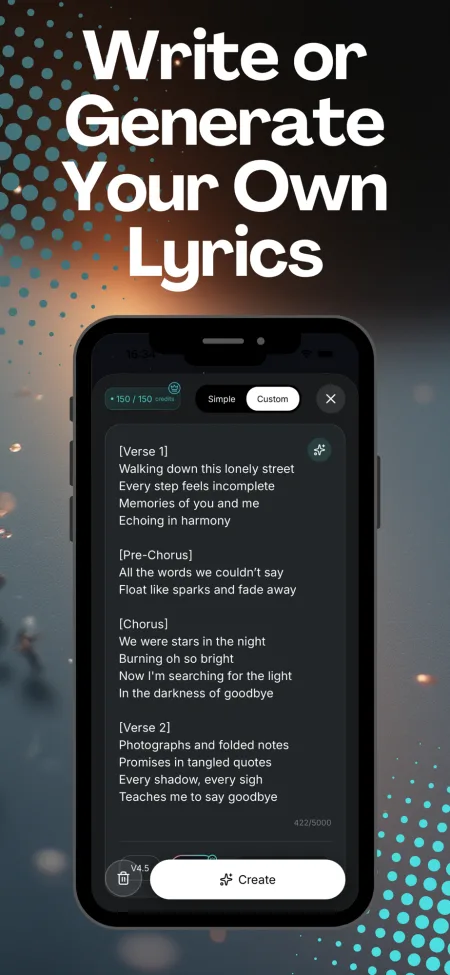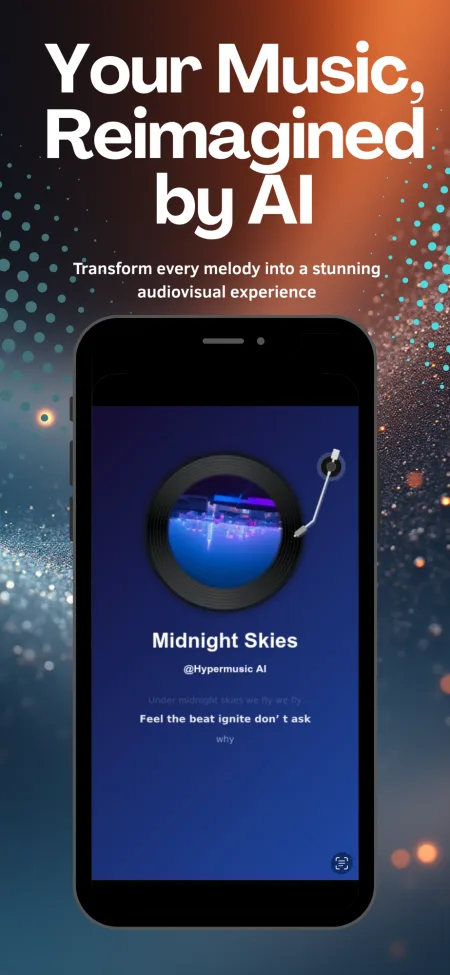
The public argument about AI and music is conducted almost entirely at the level of the finished record — whether a released song can be made by a machine, and what it means if it can. That is the least interesting place to look, because it is where the tools are used least. The work they have actually changed happens weeks earlier, in the part of the process nobody releases.
The demo that used to cost a weekend
Every song starts as a thing that does not exist yet and has to be made audible before anyone can judge it. That step used to mean a scratch vocal, a programmed drum part, a bass line played badly enough to be embarrassing, and two days gone. Most of that work was thrown away by design: a demo exists to answer one question, which is whether the idea survives being heard.
Generated tracks are very good at that question and only that question. They produce something in the shape of a finished record, quickly enough that the idea is still warm. What they do not produce is a record. The point of a demo was never that it was good.
The reference nobody has to describe
Describing music in words is famously hopeless, which is why references exist. "Like that, but less busy in the chorus" moves a session forward in a way that an adjective cannot. The problem with references has always been that the nearest one is somebody else's finished song, and it brings its own gravity into the room.
A generated reference is disposable, which is exactly what you want from one. It can be wrong in a useful direction. It does not have to be cleared, credited or lived up to, and nobody falls in love with it — the failure mode of using a real record as a temp track.
Something to disagree with
This is the use that surprises people. Starting from nothing is harder than reacting to something, and the gap between the two is not small. Generating a version you can hear is wrong is a faster route to knowing what you meant than staring at an empty arrangement — the wrong take tells you where the right one is.
That is not a creative shortcut. It is the same thing as writing a bad first draft on purpose. The output is not the product; the reaction to it is.
The parts of the job that were never the art
There is a whole layer of music work that nobody has ever been precious about: separating a mix into stems, cleaning a noisy take, transcribing a part, matching loudness across a record, generating fifteen variations of a two-bar loop to audition. These are tasks with right answers. They absorbed enormous amounts of time and produced nothing anyone listened to for its own sake, and they are the least argued-about use of the technology because nothing about them was the point.
Where it stops being useful
The finished release is where the tools help least, and the reason is structural rather than technical. A record is a sequence of decisions about what to leave out, made by someone with a reason to make them one way rather than another. A model has no reason. It has a distribution, and its output is the middle of that distribution — which is precisely what "sounds like a record" means, and precisely why it cannot be the record.
That is also why the fear and the use point in different directions. Nothing about generated audio threatens the part of the job that consists of having a reason.
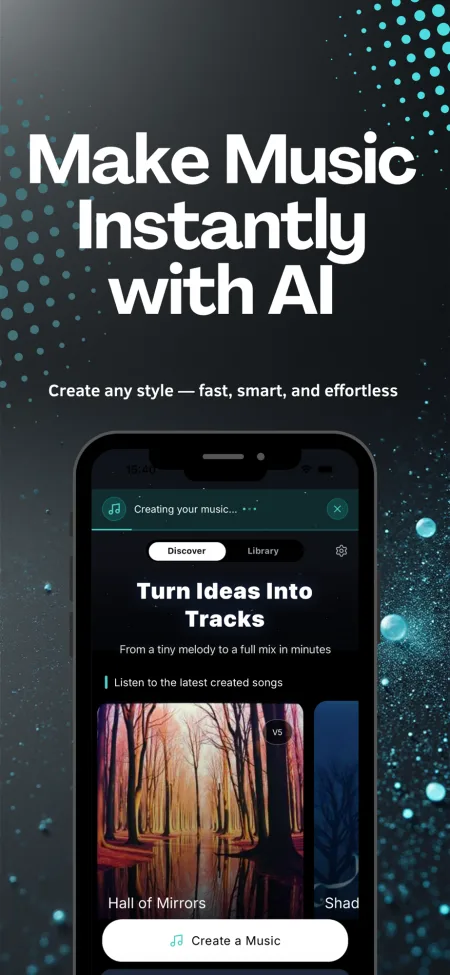
What a phone-sized version of this looks like
Most of the above assumes a studio. The lighter version — the one that fits in the twenty minutes between having an idea and losing it — is describing a track in a sentence and hearing it back. HyperMusic AI writes the lyrics, performs the vocals and produces the track across 50+ genres, in 30+ languages if you want words in one. For a sketch, the useful property is not quality; it is that four attempts cost a few minutes, so a bad one is information rather than a loss.
Which job you are doing matters more than which tool you pick, and what you end up owning is worth knowing before a sketch turns into something you release.
The part that did not move
Making music got cheaper at every stage except the one that decides whether it is any good. Knowing which of four takes is the one, and why, is still the whole job — and it is now a larger share of the job than it was, because everything around it takes less time than it used to.