A phone is now a reasonable place to make a finished song, which was not true for most of the time phones have existed. What changed is not that phones got faster — it is that the hard parts of making a track, the arrangement and the performance, moved off the device entirely. You describe what you want; the work happens somewhere else; a finished track comes back. The screen size stopped mattering the moment the instrument stopped being on it.
First, decide which job you are doing
Nearly everyone arriving at this has one of two goals, and they want opposite things from a tool.
A song for a person. A birthday, an anniversary, an apology, a leaving present. Here the words are the product. The music is the wrapping, and the success condition is that one specific person recognises themselves in it. You want to be asked for a name, a relationship and a memory, and you want to read the lyrics before anything is recorded.
A track for something you are making. A video, a reel, a game, a podcast bed, or just a beat you had in your head on the bus. Here the words barely matter and the genre is the product. The success condition is that it fits underneath something else without fighting it. You want to be asked about genre, mood and vocal style, and you want to be able to try four versions quickly.
Picking the wrong one is the most common reason people bounce off these tools. A generator built for tracks will happily write a birthday song that is about birthdays in general, and a tool built for gifts will feel slow if all you needed was eight bars of lo-fi.
What the AI is actually good at
It is good at production — at making something that sounds like a real record rather than a demo. It is good at genre, because genre is convention, and convention is exactly what a model trained on a lot of music learns well. It is good at speed: the gap between an idea and something you can play to someone has gone from weeks to about a minute, and that changes which ideas are worth having at all.
It is weaker at the thing you are best at, which is knowing what the song is about. A model can write a competent verse about missing someone. It cannot know that the two of you always argued about the same film, and that is the line that would have landed. Specificity is the part you supply, every time.
Describing what you want
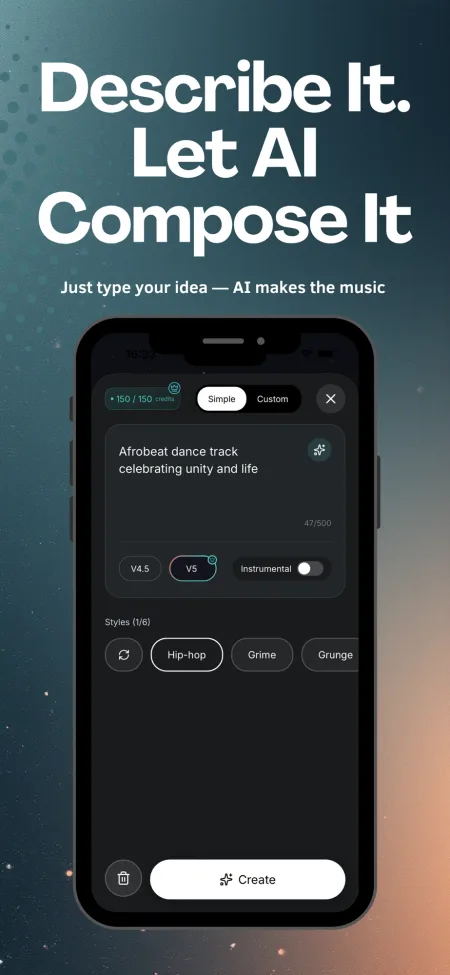
A genre on its own is a style, not a song. The difference between a thin result and a good one is almost always the description, and the fix is to add a subject and a situation rather than more adjectives. "Sad piano" is a setting. "Sad piano, the last ten minutes of a long drive home" is a song.
When the result is not what you meant, change the sentence rather than generating the same one again. Regenerating an unchanged description is the most common way to spend an afternoon getting the same song four times.
Which app for which job
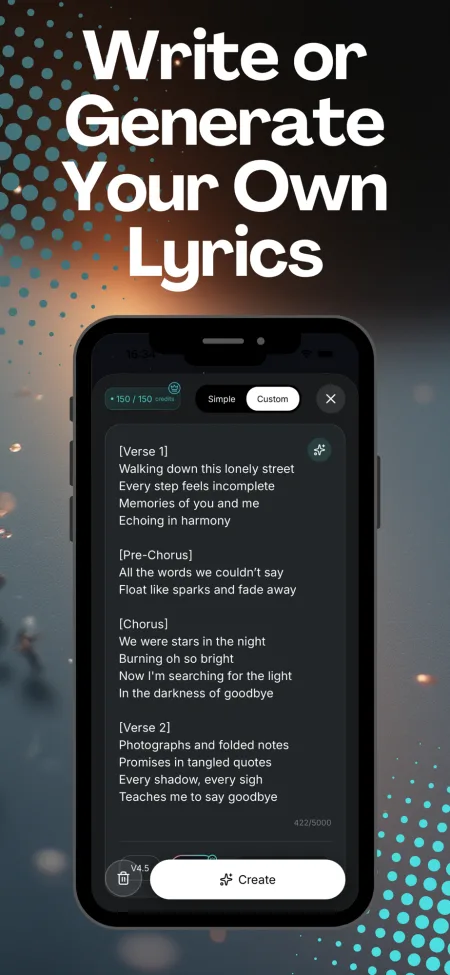
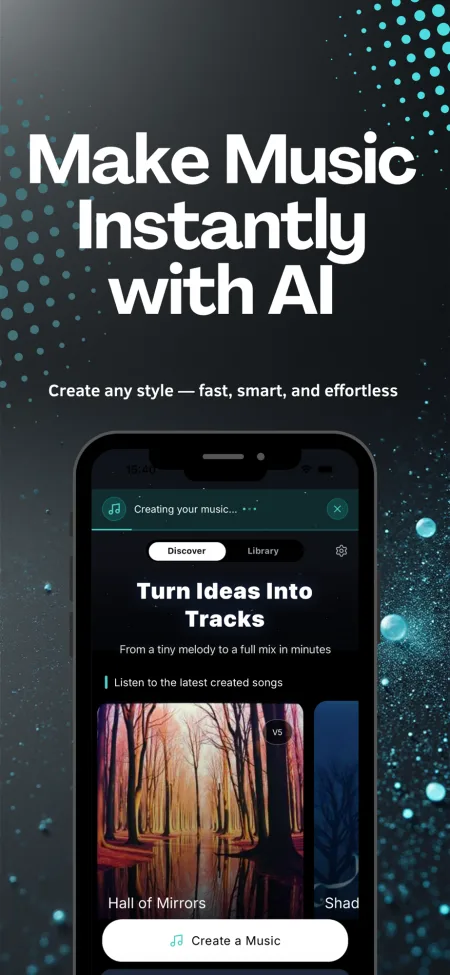
HyperMusic AI is the one for tracks. You describe an idea in plain language, choose from 50+ genres and a vocal style, and it writes the lyrics, performs the vocals and produces the full track — usually in under a minute, and it can sing in 30+ languages. The one-sentence guide covers the steps.
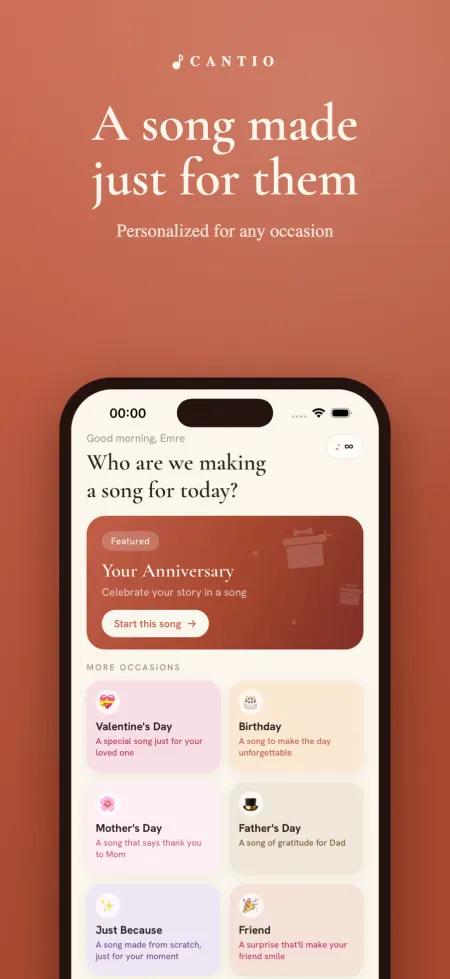
Cantio is the one for people. It asks who the song is for and what the occasion is, shows you the lyrics before anything is recorded so you can edit any line, and returns two different songs from the same story. The custom song guide is the walkthrough.
Cantio is free to download as well, and needs iOS 16.4 or later.
What you can do with what comes out
Worth settling before you build something around a track rather than after. What you are allowed to do with a generated song is set by the terms of whichever tool made it, and those terms differ — some distinguish between personal use and commercial use, some tie rights to a paid tier. For HyperMusic AI, the HyperMusic Terms grant AI Creations to you for personal and commercial use, subject to copyright law and third-party rights, and say that generated music is not guaranteed to be unique. Read the equivalent page for any tool before a track ends up in something you publish, and what a commercial grant actually covers is its own question.
The part that is still yours
The tools have made production cheap and left taste expensive. Choosing the detail, knowing when a take is right, knowing who the song is for — none of that got automated, and it is most of what makes one song worth hearing twice. A phone is now enough to make a song. It is still not enough to know what the song should say.